
Commercial and site brief
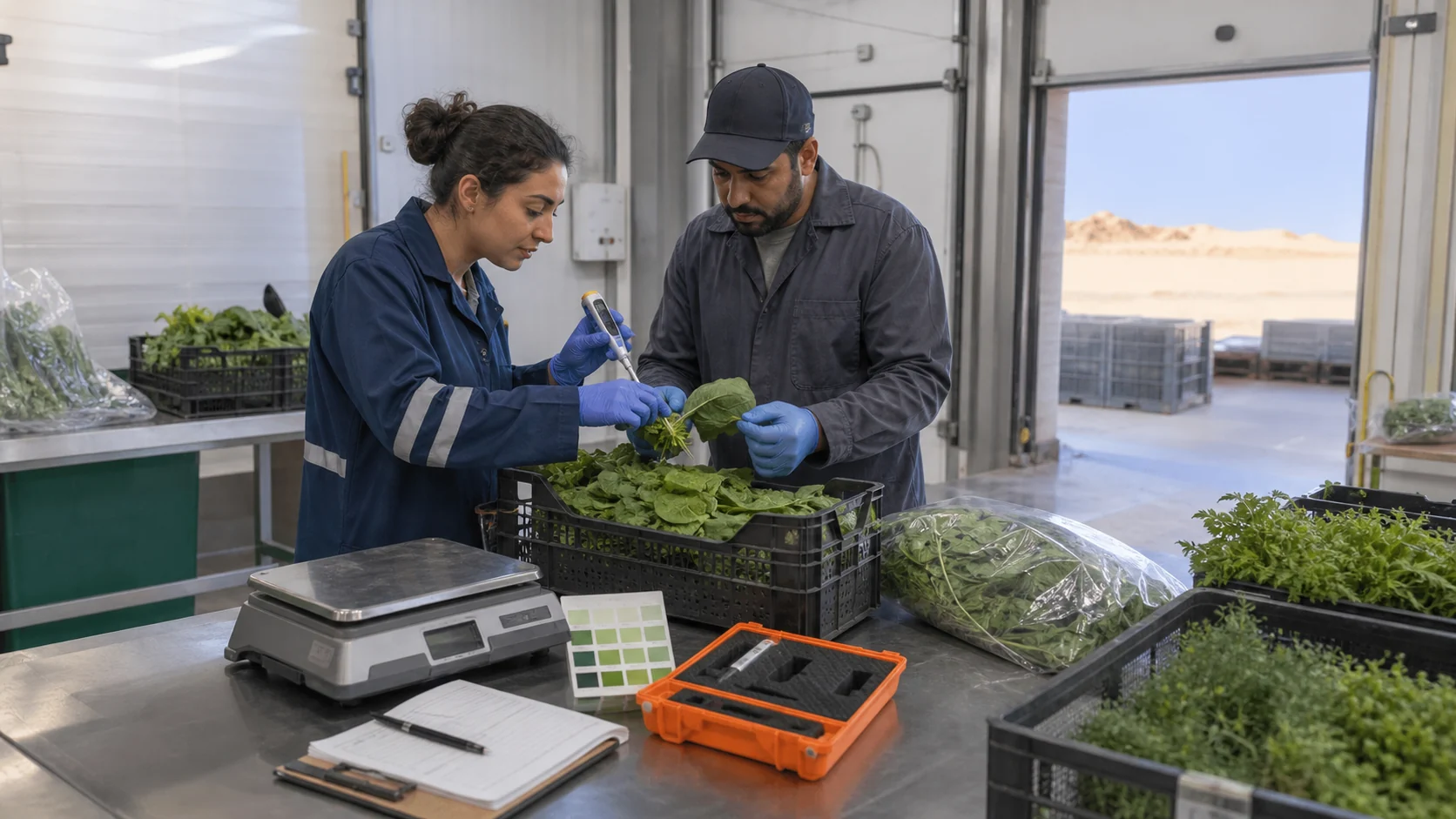
Define crop, grade, pack format, weekly volume, delivery window, site zones, utilities, equipment, access, and the baseline against which performance will be judged.


Fresh food systems engineered for hot, water-scarce regions.
Aither is developing smart farms and crop programmes for regions where heat, water scarcity, import dependence, and volatile logistics make fresh food difficult to produce reliably.
Its central reversal is commercial as much as technical: specify the buyer, grade, pack format, weekly volume, and delivery window before selecting the growing system. Crop science, controls, and infrastructure are then judged against a measurable operating brief.
From commercial brief to farm operations
Intelligence, traceability, planning, spatial context
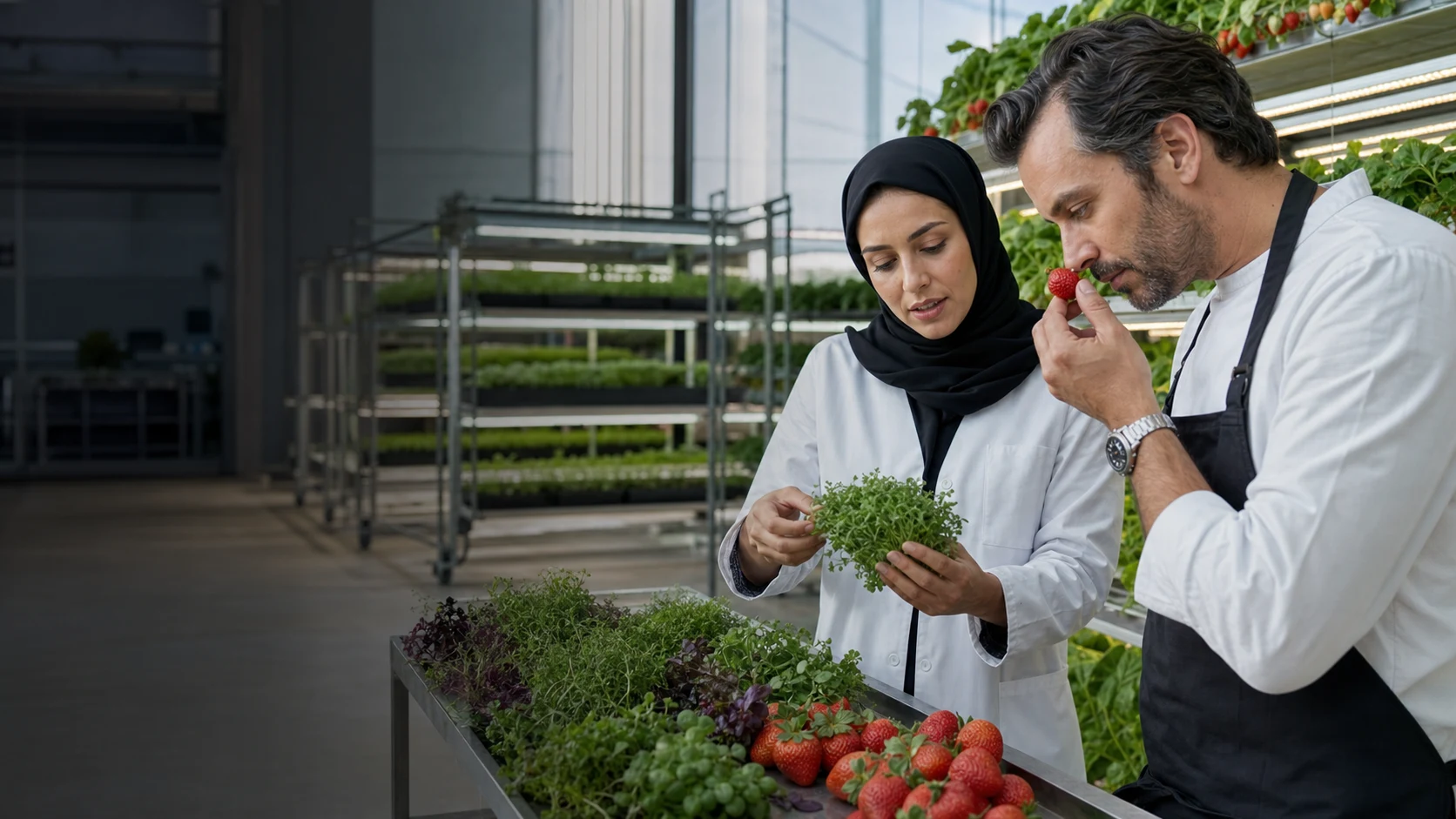
From microgreens to specialist botanicals
Masdar City, Abu Dhabi
In arid markets, a technically impressive farm can still fail on crop fit, energy, labour, grade, or buyer acceptance.
The Gulf imports much of its perishable produce through long supply chains. Local production can shorten that chain, but indoor growing shifts resource demand rather than making it disappear. Cooling, lighting, fertigation, labour, materials, and maintenance must all be accounted for.
Aither therefore treats the crop programme as the primary product. Hardware is valuable only when it can reproduce a crop recipe, protect quality, and meet an agreed commercial window under local constraints.
The architecture preserves crop, zone, asset, recipe, and batch context instead of scattering them across disconnected control systems.
Define crop, grade, pack format, weekly volume, delivery window, site zones, utilities, equipment, access, and the baseline against which performance will be judged.
Run cultivar trials, establish crop protocols, record quality evidence and resource envelopes, and create a release gate before a recipe is permitted to scale.
Govern recipe versions, production plans, operator work, exceptions, maintenance, and the batch record that connects decisions to outcomes.
Map sensors and control interfaces to physical assets, apply permissions, and maintain secure edge connectivity without losing operational context.
Coordinate climate, lighting, fertigation, energy, maintenance, harvest, and recorded human work as one production environment.
Aither frames expansion as a sequence of evidence gates, not a single construction decision.
Fix the buyer, grade, pack format, delivery schedule, price logic, and acceptance criteria before a growing configuration is selected.
Choose cultivar, climate set-points, lighting, irrigation, nutrition, crop protection, harvest timing, and post-harvest handling for the local objective.
Measure usable yield, grade-A packout, resource use, labour, climate stability, exceptions, and buyer acceptance over a declared period.
Integrate zones, equipment, sensors, controls, operator workflows, and maintenance responsibilities around the validated production method.
Compare each batch with the baseline, retain recipe lineage, and expand only when repeatability and operating economics support the next step.
Usable produce matters more than headline biomass.
Reported against a named crop, boundary, baseline, and period.
Operator activity and system deviations remain part of the batch record.
A crop is not validated until its quality and delivery fit the demand brief.
Aither Pro is entering commercial assessment, Aither Home is positioned for pilot availability, and Home XL is configured to order. Each pathway remains governed by crop-specific acceptance criteria and operating evidence.
The immediate programme covers crop science, system integration, first-harvest support, and the formation of UAE buyer, research, site, and infrastructure partnerships. Scaled commercial performance remains a future validation gate.