
Aethon
Reusable LOX/methane launch architecture and a Helios engine family; the official venture page labels the programme in development.


Build the missing infrastructure of the space economy as one connected system.
Zero Matter is a sovereign SpaceTech venture studio in Masdar City, Abu Dhabi. It originates companies around shared infrastructure gaps, develops technical architecture and early intellectual property, and recruits founders for independent scale-up.
The portfolio is organised as a connected stack rather than a collection of unrelated bets: access to orbit, infrastructure in orbit, and long-horizon capability beyond Earth. Each venture advances through its own defined maturity state and validation gates.
Across a shared infrastructure stack
Launch, orbit, deep space
Ideation through spin-out
Masdar City
Launch, ground, data, energy, servicing, mobility, manufacturing, and habitats are usually financed and engineered as separate markets.
That separation leaves structural gaps between a payload and the infrastructure required to operate it over years. A capable spacecraft can still depend on foreign ground networks, unavailable servicing, uncertain power, fragmented data custody, or a mission architecture that cannot be refuelled or repaired.
Zero Matter’s response is portfolio-level systems engineering: originate ventures where interfaces are missing, and design them to interoperate from the beginning.
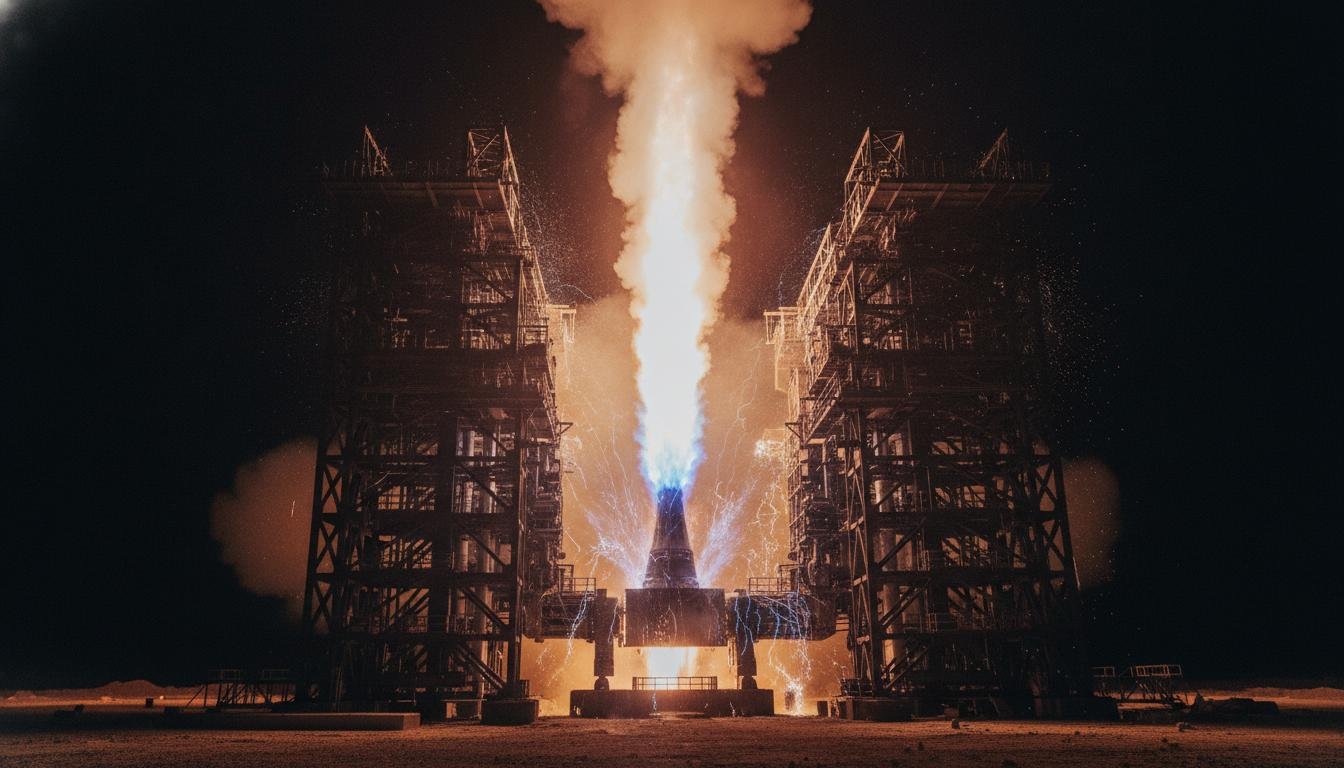
Reusable LOX/methane launch architecture and a Helios engine family; the official venture page labels the programme in development.
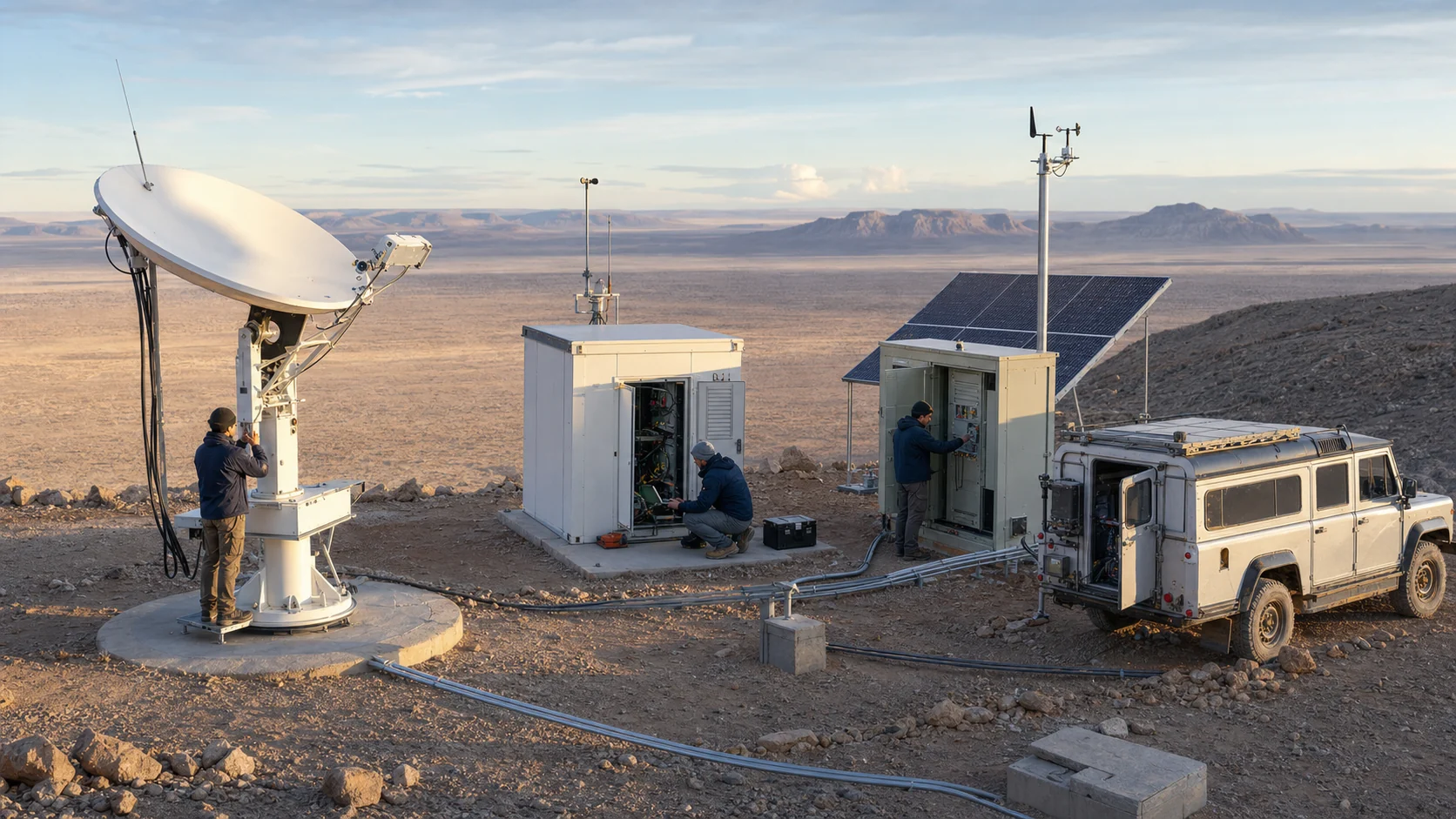
A sovereign customer-side ground segment spanning MissionOS, data bridge, and receiver infrastructure; labelled platform in validation.
A proposed GEO optical-custody spacecraft and trusted processing chain; its first mission is described as in design.
Hosted orbital edge computing and a sovereign space-cloud pathway; the first mission is described as in planning.
A space-based solar-power architecture built around a 120 MW reference concept; labelled architecture phase.
Mobility, servicing, docking, and mission operations; the project reports eight defined missions rather than completed flights.
Orbital refuelling, depot storage, transfer, and propellant logistics; the official status is in development.
Near-Earth-object screening and preliminary mission design culminating in sealed readiness dossiers; labelled pipeline operational.
Digital twins, inspection, robotic assembly, and orbital-manufacturing methods; the venture page labels it bench proven.
Sovereign-station pathways, hosted laboratories, life support, and crew systems; presently described as pathway studies.
Identify a strategic gap in the launch-to-deep-space stack and test whether it belongs in a shared portfolio architecture.
Study technical feasibility, the market and customer boundary, the intellectual-property landscape, and the interfaces with neighbouring ventures.
Develop early hardware or software, patentable inventions, an MVP boundary, and a credible technical roadmap rather than a pitch-only company.
Recruit an external founder and form an independent venture around the validated architecture, evidence, and initial partnership pathway.
Mission needs, strategic autonomy, procurement pathways, policy, facilities, and long-duration programme sponsorship.
Scientific payloads, test facilities, specialist talent, joint studies, verification, and technology transfer.
Subsystem supply, manufacturing, launch and ground services, mission integration, and operational market access.
Finance aligned to gated technical milestones and venture-specific risk rather than a single uniform portfolio timetable.
The portfolio uses distinct maturity labels including in development, in validation, in design, in planning, architecture phase, pipeline operational, bench proven, and pathway studies. Commercial deployment and independent performance evidence are evaluated at venture level.
Each venture advances through its own prototype, evidence package, regulatory and mission dependencies, and acceptance gates.