
Blended wing airframe
Integrate lifting surface, payload volume, pressurised centre body, structural load paths, landing gear, and future cryogenic storage within one geometry.


Aircraft architectures built around the physics of efficiency.
STRATOZ is an Abu Dhabi aerospace programme studying two demanding aircraft families: ultra efficient blended wing body platforms and low boom high speed transport.
The programme treats aerodynamics, structures, propulsion, thermal management, flight controls, manufacturability, safety, and certification as one coupled system. Performance remains a target until simulation, ground testing, and flight evidence agree.
Lift, payload, structure, and propulsion integrated as one geometry
Subject to low boom, thermal, propulsion, and regulatory validation
Cryogenic storage and turboelectric integration under study
Research, engineering, and programme formation
Drag, structural mass, usable volume, propulsion, thermal rejection, stability, noise, and certification interact too strongly for sequential optimisation.
Conventional tube and wing layouts separate the lifting surface from much of the payload volume. That makes the aircraft familiar to design and certify, but it limits how deeply structure, cabin, cargo, and propulsion can be integrated.
High speed transport compounds the constraint. Wave drag, community noise, inlet behaviour, heat, range, and fuel pathway must survive the same mission. STRATOZ therefore frames the aircraft as a testable system of systems rather than a collection of optimistic component claims.
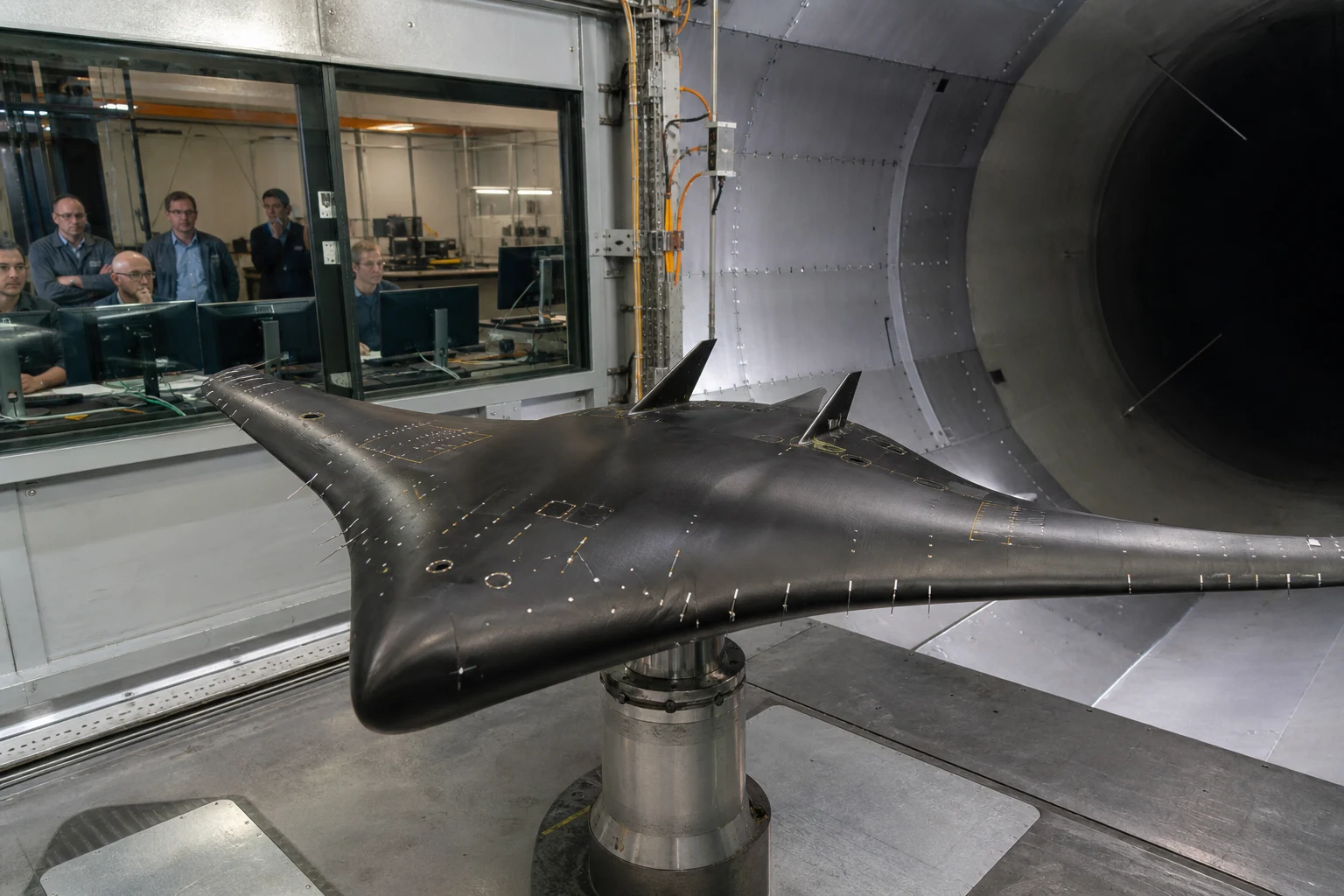
Integrate lifting surface, payload volume, pressurised centre body, structural load paths, landing gear, and future cryogenic storage within one geometry.
Study conventional demonstrators, hybrid electric systems, fuel cells, gas turbines, electrical distribution, distributed fans, heat rejection, and fault isolation as a staged pathway.
Resolve composite pressure loads, fatigue, impact behaviour, inspection, repair, and the containment of cryogenic systems before airframe level claims are made.
Develop fly by wire control, envelope protection, degraded mode handling, propulsion reconfiguration, sensor integrity, and hardware in the loop test coverage.
Couple wave shaping, inlet design, variable cycle propulsion, structural heating, route constraints, and community noise measurement.
Bind requirements, geometry, simulation, test articles, configuration changes, anomalies, and certification evidence into one traceable model based programme.
The following design targets define the acceptance programme for aerodynamic, structural, propulsion, and flight validation.
The stated payload, range, and sub 1,200 metre runway target must be closed simultaneously in a declared mission model.
Mach 0.85 cruise target with cabin, evacuation, pressurisation, stability, and infrastructure constraints included.
A 16 to 24 passenger concept with a below 75 dB boom target that requires measured community exposure and regulatory review.
A 5,000+ nautical mile target dependent on propulsion efficiency, heat management, noise, route access, and certification evidence.
Compare coupled computational fluid dynamics with wind tunnel force, pressure, flow visualisation, stability, and control data across relevant conditions.
Characterise centre body pressurisation, load transfer, fatigue, damage tolerance, crash behaviour, inspection access, and field repair.
Resolve fan placement, boundary layer effects, electrical distribution, thermal rejection, acoustic propagation, and safe degraded operation.
Test storage, insulation, boil off, leak detection, venting, thermal cycling, ignition control, fault containment, and emergency response.
Validate handling quality, control authority, sensor disagreement, actuator faults, propulsion loss, and envelope protection through simulation and hardware in the loop testing.
Translate every requirement into a verification route, test article, configuration record, acceptance limit, authority discussion, and retained result.
Declare payload, route, reserve, speed, atmosphere, runway, energy source, cabin or cargo boundary, and comparator before quoting performance.
Use wind tunnel data to update drag, lift, stability, control, propulsion interaction, and uncertainty across the intended envelope.
Test representative composite and pressure structures through limit, fatigue, damage, leak, thermal, and repair scenarios.
Demonstrate energy conversion, distribution, cooling, fan control, failure isolation, and containment on an instrumented ground rig.
Measure handling, stability, performance, noise, system interaction, and degraded modes before projecting platform level capability.
Map verified requirements and unresolved hazards into an authority facing evidence package with explicit next tests.
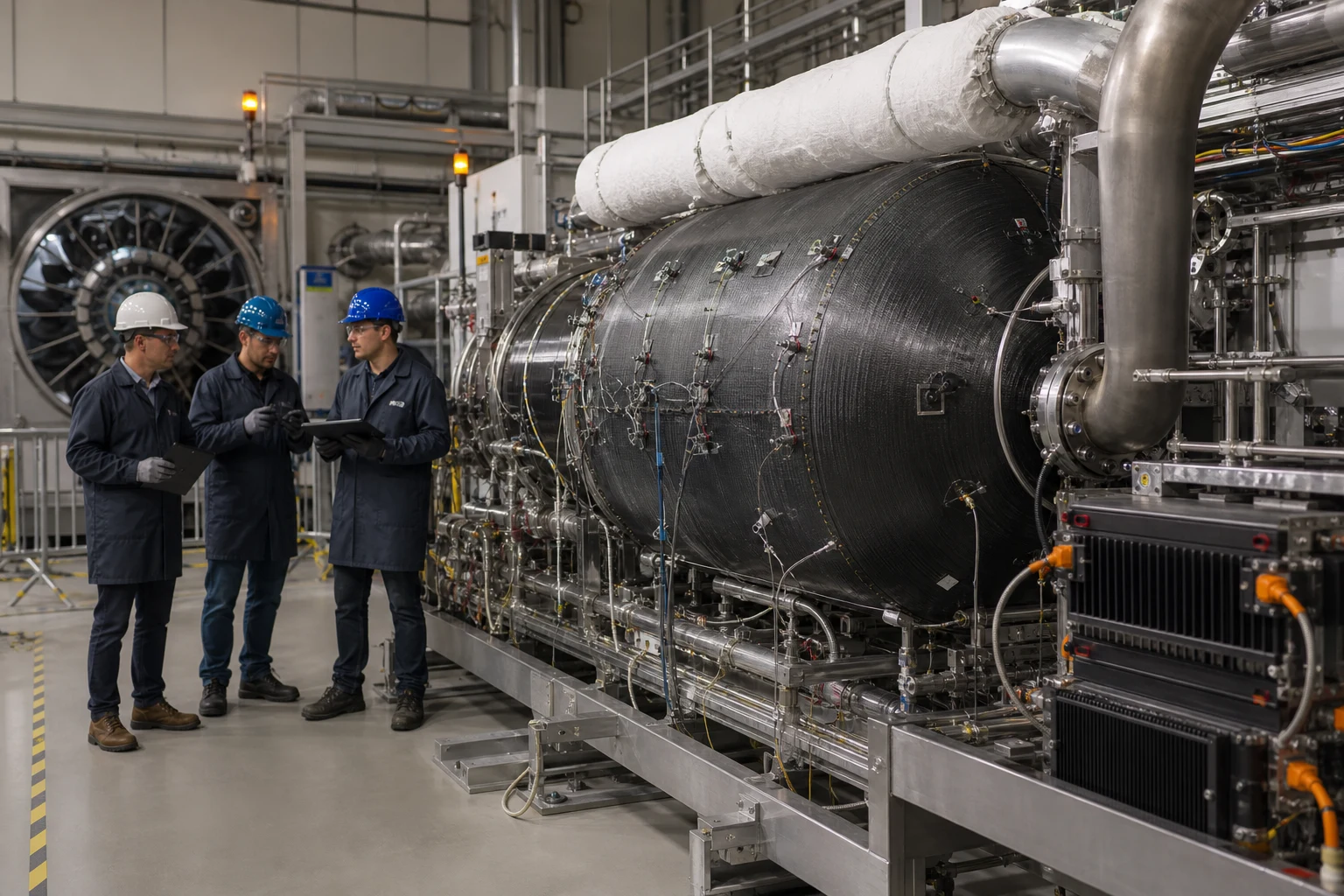
Forces, moments, pressures, flow behaviour, uncertainty, and configuration identity.
Representative materials, joints, pressure boundaries, loads, inspection methods, and residual capability.
Measured at component, integrated rig, and demonstrator level against the declared mission boundary.
Instrumented levels and signatures rather than geometric inference alone.
Normal and faulted operation with explicit thresholds, coverage, and recovery logic.
Requirements, models, hardware, software, calibration, anomalies, decisions, and retained results remain linked.
Payload volume, turnaround, loading, runway, maintainability, reliability, and route energy performance define the useful aircraft.
Cabin environment, evacuation, ride quality, accessibility, acoustics, operations, and infrastructure must mature with the airframe.
Mission time must be evaluated together with community noise, thermal limits, route access, propulsion, and diversion capability.
Airlift, command, surveillance, communications, and logistics studies require their own safety, systems, and mission evidence rather than a generic platform claim.
STRATOZ is in concept and early engineering. The immediate programme moves from mission definition and aerodynamic correlation to representative structures, integrated ground systems, and a bounded flight demonstrator.
Each platform target advances only with a traceable test article, method, result, uncertainty statement, and configuration record.